Thursday, October 25, 2007

Consillence

The British East India Company created an impact that changed Indian, British and American history forever. However nothing could have happened without specific events combining together to form historical changing events. Queen Elizabeth I was queen of England, signed the English Royal Charter, giving permission to the British East India Company all monopoly over the East Indies. She signed the English royal charter (a charter granted by the sovereign in mostly great Britain) on December 31, 1600. The East Indiaman, was the first ship created for trading, and transporting goods around the Cape of Good Hope to India. Without these three political, art, and science aspects the major events in history that the British East India Trading Company caused would have never happened.

'The Queen Elizabeth I was born September 1533, and died March 1603. Her time as queen, also known as the Elizabethan era was when great play writes and power flourished. Elizabeth was queen of England, Ireland, as well as the fifth and final monarch of the House of Tudor. Queen for 45 years, she enhanced English power and created great influences, and religious influences worldwide as well within England. One of her greatest influences and enhancement to English power while she was queen was in the year 1600 she signed a royal charter giving the British East India Company a 21 year monopoly over East Indies. A monopoly is defined as "a persistent market situation where there is only one provider of a product or service, in other words a firm that has no competitors in its industry." From Wikipedia. She did this for British profits and to carry out trade with the east. However the first motive was to break the Dutch monopoly of spice trade with the East Indies. The first Dutch expedition was in April 1595. Spice trade has always been popular and lucrative, but the Dutch East India Company was formerly the largest trading company. British then wanted Dutch monopoly over the spice. When the Dutch defeated the British, the British then moved their activities to India. In India the British found several Indian made items and started selling those in Europe for British profit as well. When the spice trade failed in India, it caused the British East India company to not only have monopoly over India, but to

Queen Elizabeth I completely take over the subcontinent.

Art is not just paintings and masterpieces. "Art refers to a diverse range of human activities and artifacts." According to Wikipedia. A royal charter is meant to legitimize a company, city or incorporation. This particular royal charter, signed by Queen Elizabeth I confirming and legitimizing the British East India Company was a piece of art. The English royal charter was documentation that changed Indian and British history forever. Charter granted by Queen Elizabeth to the Governor and Company of the Merchants of London, resulting trading into the East Indies, signed 31st December 1600. "Elizabeth, by the Grace of God, Queen of England, France, and Ireland, Defender of the Faith, et cetera. To all our Officers, Ministers, and Subjects, and all other People, as well within this our realm of England as elsewhere, under our Obedience and Jurisdiction, greeting." Without this royal charter, the British East India Company would have never been given permission to all monopoly of the East Indies, therefore creating change in history. Not only this charter effected the East India Company. The Swedish East India Company designed and created the first East Indiaman. These ships were used for trade and were taken over by the British East India Company. The charter was signed June 14th 1731 legitimizing the Swedish East India Company and giving them monopoly over everything east of India. Until they went bankrupt in 1813 because tea trade diminished and there was no profit. There are tons of royal charters, but the one that seems to make the biggest impact was the English Royal Charter.

The East Indiaman was a merchant ship created for trade by the East India

Company. The first ever made was by the Swedish East India Company named the English Royal Charter

The East Indiaman Repulse (1820) in the East India Dock Basin.Gothenburg. When Queen Elizabeth signed the royal charter, the British East India Company made a replica of the Swedish ship because of it's ability to hold cargo, passengers, goods, and to defend themselves in battle and piracy. This was a special kind of ship, made for trade because it could hold large amounts of goods to trade in India. It was different from all other ships in the 1600s and later because of its size and its outstanding ability to hold massive amounts of weight. Other ships couldn't do that in this time period. The East Indiaman could hold up to 1100 and 1400 tons. They became very popular after the British East India Company took them over, because of there special design made for merchant trade and also made for battle. Weymouth and the Madras measured 1426 tons, 175 feet in overall length of hull, 144 feet keel, 43 feet beam, 17 feet draft. The ships became a big part of the Royal Navy. The Weymouth and the Madras both purchased by the Royal Navy for use in battle. Some of the Royal Navy ships were in fact two of the largest, the Earl of Mansfield and Lascelles. There was always improvements made upon them. East Indiaman's were the largest merchant ships built in the late 18th and early 19th centuries. They would suscefully battle and defeat the French. The Elizabeth (East Indiaman) was a ship belonging to merchants made for the British East India Company trade. When it left London to unite itself with other East Indiamen on October 26th it wrecked. East Indiamen effected all other ships made after the 1600s. Every ship that went out to sea on voyages was in a similar design of the East Indaman. It could handle strong winds and currents, and carry large loads of passengers and cargo. This design of ship was what everybody wanted.

These three things came together to cause a huge impact on history. When Queen Elizabeth I signed the royal charter and the East Indiaman was created to be the ship of the British East India Company, the company had permission to

East Indiaman

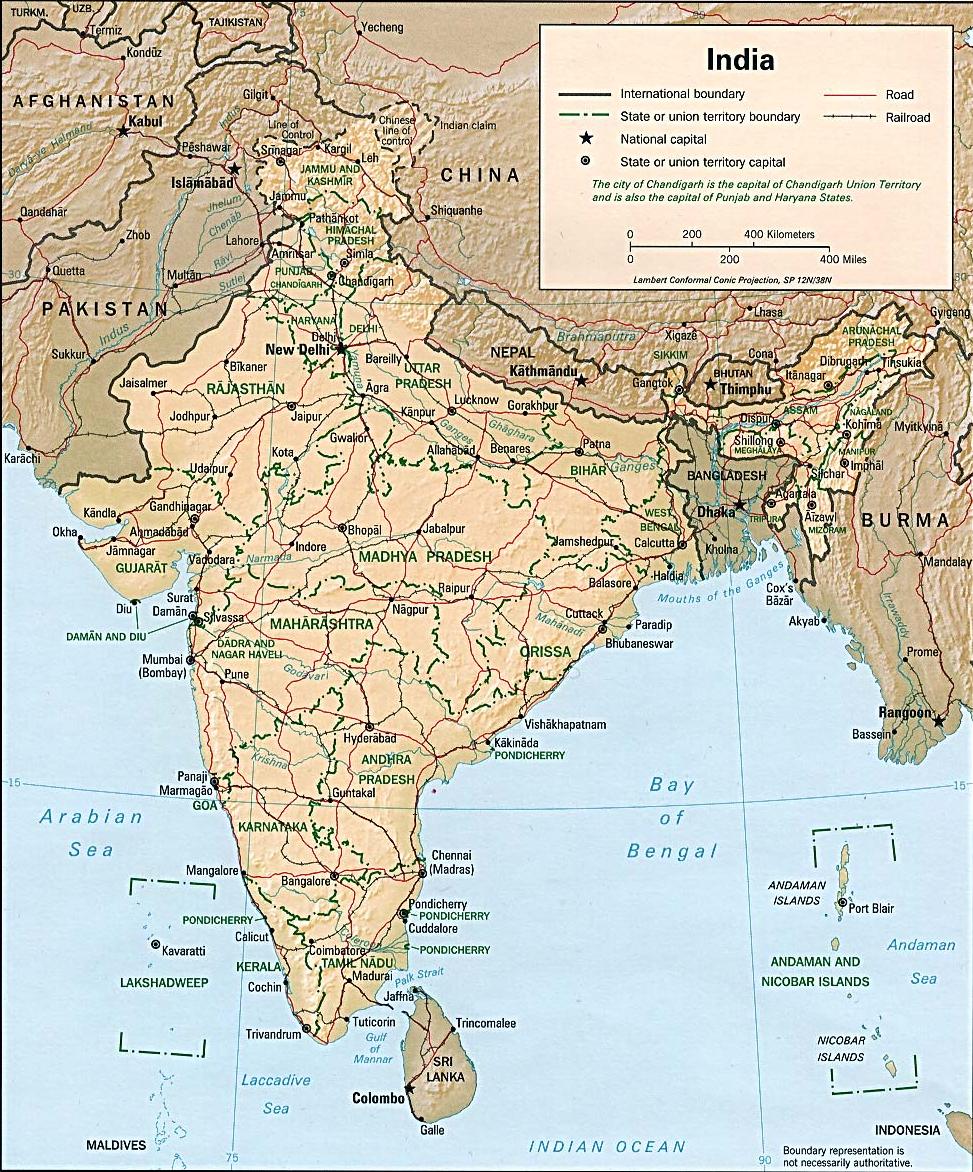
run, and to run efficiently. Therefore, eventually taking over India. The first dock in India was Surat which was the first trading post in 1608. They established their first factory (trading post) in Machilipatnam off the Bay of Bengal. King James I renewed Queen Elizabeth's charter in 1609 giving the company indefinite monopoly over India. The company, having European base in India and being fully established started to deal with political aspects of India. During the war of Plassey the company started to collect taxes. They gained even more power by defeating natives in local riots. They just kept gaining more power and in the mid 1800s the company controlled a portion of India, controlling military, economy, government, politics and religion. The Indian Rebellion in 1857 was when the British heard a rumor that gunpowder cartridges were being greased with fat from hogs and cows. When they made the natives bite into them they refused because hogs are considered unclean by the Muslims and the cows sacred to the Hindus. The natives lost and resulted in the company taking complete control over India. The Indian Rebellion really started to pick up in 1857. It lasted for 13 months. There were many wars, and when the Indians lost and the British retook territory, the rebels were severely punished. There were many soldiers from both Britain and Indian armies killed. The Indian Independence Movement happened when Gandhi arrived in India. He established protests, and encouraged a new non-violent way to go about defeating the British. Eventually after tons of Indian blood was spilled, India became free of British rule. On the 26th of January in 1950 India was finally pronounced the Republic of India. However, India wasn't the only country they had effect on. The British East India Trading Company gained control over all trade from China to India to the Caribbean and controlled all commerce to and from North America in 1760. The British East India Company was the cause of the 1773 Tea Act. The tea act was a tax law passed in London that resulted to the Boston Tea Party. There was an increase in taxes paid by American Colonists. They were furious The Indian Rebellion of 1857 and protested by destroying crates on ships in the Boston Harbor and dumping all tea into the Boston Harbor on December 16, 1773. This is an event that helped cause the American Revolution.

There were several East India Companies, but the one that made the most change in history was the British East India Trading company. It changed Indian history and brought them to Independence, and also changed American history, and helped cause the events that led to the American Revolution. If it wasn't for Queen Elizabeth I, the royal charter she signed, and the East Indiaman making it possible for the British East India Company to trade, these history changing events would never have happened. Times in 1874 reported "It accomplished a work such as in the whole history of the human race no other company ever attempted and as such is ever likely to attempt in the years to come."

Timeline

India

England

Monday, October 15, 2007

Politics and Revolution

Medici Money Essay.

Out of the many factors of PERSIA (politics, economics, religion, society, intellect, and anesthetics) I feel that politics is the most changing factor in revolution. Politics means "social relations involving authority or power" Aka, who has the money and social backup controls the authority and power. The Medici family had the authority, the money, the people, and the power. Why? Because they were well known and people loved them. They controlled every ones money, they controlled the loans and the interest. Why wouldn't you want to make friends with the Medici.

Political power: "Is a type of power held by a person or group in a society. Political power is held by the holders of sovereignty. Political powers are not limited to heads of states, however, and the extent to which a person or group holds such power is related to the amount of societal influence they can wield. The ability to influence the behaviour of others with or without resistance." Said by Wikipedia. I think this is a good description of political power. It is also a good description of the Medici family. No matter who was really in office, the Medici was the group that held the power, they had the societal influence. They had that ability to influence the behavior of others.

Whoever has the money and power runs the state, because of societal influence. The Medici more or less ran Florence. Your family name had everything to do with politics, your financial history. Not your education, or your ability to work. To even qualify for the new government or the Signoria made up of eight priors and a Gonflaoniere della giustizia (a high communal post, higher than the other eight) men had to meet certain restrictive financial and family criteria. Lucky for Cosimo he had money, he was educated and had the ability to work. He loaned money out and he was a giver. People loved him and he had tons of supporters, but also being this way you are going to have enemies. That's why in 1433 Cosimo was to be exiled or beheaded. He had so many followers though, that Rinaldo degli Albizzi (the signoria of the time) his enemy couldn't possibly sentence him to death for not paying his taxes. So Cosimo was exiled, but that didn't stop him. Everyone knew it wouldn't. When another set of priors was elected, Cosimo came back. The Pope left and Cosimo fell into a very high political position. He now ruled everything. The money and the power. He exiled Rinaldo degli Albizzi along with others, and when they went to Venice, because Cosimo had so many friends they were all beheaded. Furthermore, politics means having money and support behind you, and because the Medici family had those things they rose to the top. Causing a revolution.

No matter who is in office or who runs the state politics is the dominant causing factor. Yes, the Medici family caused the revolution, but politics in general helped them do that. With Rinaldo degli Albizzi elected, Cosimo was sent to exile made friends in Venice and then returned. So what politicians say and do helps cause revolution. Along with that, whenever there is a revolution politics change. For example, Feudalism changed to Monarchy. Politicians in office or "politicians" like the some of the Medici set the laws, then people abide by them. How can a revolution change without politics? They tell you what to do. The Pope for example said usury was wrong, but he did it! People saw that and did it themselves, like the Medici. The Pope was a political figure so people listen to him. Although what political figures say wasn't necessarily what people were doing at the time, because of what politicians did. It's what politicians say and DO. The usury law meant nothing if the even the Pope doesn't follow it. Not only that but people did it to make money. That is how you made money, by committing usury. That's how the Medici drove a revolution.

You could say that I am describing a little of economics too. That is true because the Medici controlled all of the money of the time. Which is a huge factor in revolution. Although controlling the money by itself is not enough. You need society backup and followers, family name and financial background. You need authority and power, as well as money. This is what causes revolution.

The Medici family had the money, they were known to be one of, if not the wealthiest family in Europe. Because they ran the bank and have run the condottiere (leader of a band of mercenaries to fight in wars) before, they make political decisions. When Florence went to war they went into debt. The families with the money refused to pay taxes and the people without money were paying them. So Cosimo, because he controlled the bank, the money, and the power decided that if you have certain amounts of land and money you pay a certain amount of taxes; "Taxation in proportion to ability to pay." They started interest to gain money, after that there were no more willing loaners without something in return. So as you can see, being apart of the political world, and not only that but being in control by societal influence, which is also being apart of the political world causes revolutions. The Medici family being so rich and well liked, they had political control. In conclusion, having political control no matter what, causes revolution. Politics is what caused the Renaissance revolution, revolutions before that, and every revolution to come after.

Friday, September 28, 2007

Humanism and "Flat World"

Humanism, is the creation of individuality, of opinions, questioning, personality, discovering ones self, goals, dreams, hopes and fears. The flat world, is the creation of technology, competition, knowledge, and untouchables. These two forces are alike and different in many ways. They are connected because reading about one will tell you the outcome of another. Both revolutionizing how a society will work, creating different meanings of the word individual. Both creating a way of people being unique, but one having an obsession with church and the other technology. Could humanism being the base of the flat world revolution be the outcome of the flat world? Could humanism and it's meaning of individuality become a revolution once again and revolutionize the flat world? Or could the flat world result in utter loss of individuality? Reading about humanism will tell you the outcome of the flat world.

Humanism and the flat world are related by the way they became revolutions. Forces that changed the way people lived their lives to a whole new meaning of life. Humanism is the force that drove the Renaissance revolution. Technology is the force that is driving the flat world. They started a new revolution of the way people thought of themselves. Like in the flat world new technology creates new ways to communicate and that changed the way the world works together. People now think or will think in the flat world like they are just another person, not as an individual. They started a whole new way of defining the way we live our lives. Before these revolutions hit we were living our lives a different way. Before humanism we saw everyone as the same person. Everyone had the same goals, the same understanding of the meaning of life. They wanted to get to heaven and avoid hell at all costs. Humanism started a whole new way of the way we lived our lives. A different definition of the meaning of life. Everyone was one under the church and humanism forced that out and people saw themselves with a different destiny. They realized that there was more to life than living scared, being scared to go to hell. Humanism stayed with us for a long time. There might have been minor changes now and again, but there is still humanism today. The flat world is driving humanism out. Technology and the flat world are a new revolution. We don't classify ourselves as flesh today or what we are physically made of we classify ourselves as where we are from, our accomplishments, where we live, what job we have. Technology is the flat world. That is the force that will drive us to our new revolution. It is opening up doors where we can communicate and collaborate with the rest of the world. That is going to change the way we live our lives. Not only will it change the way we live though it will give life a new meaning. Some people embraced humanism, just like some people are embracing the flat world, and others won't.

Humanism created a new way of thinking of yourself as an individual outside of the church. There was no individuality before humanism. Humanism created contrasting personalities. Everyone thought for themselves and started to become opinionated. People set their own goals, and dream different dreams. Questioned things that they have always believed in. The flat world is changing the way we look at ourselves as a individual. Their revolutions are two different concepts. Individuality is given a new meaning in the flat world, it is no longer what you want to reach, your dreams, where you are in a physical sense. It is what we have or are able to accomplish, and where we live, where we are technology based, our knowledge, and our uniqueness. In the flat world we have dreams, but our dreams all lead to the same things.

One thing that these two revolutions created is uniqueness. Humanism and the flat world are all about being unique. Humanism was a way of expressing yourself outside the church. Being your own unique person, and not being the same as everyone else. Uniqueness and the flat world are very similar to the humanism revolution. In order to really make it in this world, you have to be unique. Or in other words, an "untouchable". An untouchable in Friedman's sense is someone where there job cannot be outsourced. In the flat world you cannot be average. Humanism was the coming out of being ordinary. Everyone had the same beliefs, everyone lived the same and everyone reached out for the same thing. Humanism and the flat world is where everyone reaches for different things. You know what you as an individual wants and you go after it. There are still ordinary people, but the unique, different and creative ones are the ones who make it. In a humanism world and a flat world. They are the ones who people look up to, and strive for what they have.

In the time before humanism, peoples lives revolved around one thing. The Catholic Church. They aided by their rules, everyone lived and thought and dreamed the same. They were in complete obsession with the church. Even when humanism stepped in, people were still scared. People were scared of becoming an individual. Of going to hell because they didn't live exactly to the Catholic rules. The church became a huge obsession. As the humanism revolution became longer and longer obsession started to die off. More and more people started to live their lives differently. Some even questioned the Catholic religion and believed in another, or didn't believe at all. Then the obsession shifted from the church to technology. The new flat world revolution is one big obsession with technology. You can do anything today with technology today. To make it in this world you have to learn technology. It is becoming a ridiculous obsession. You can get anything on the Internet now. If you don't have a computer at home, you could fall behind in school. Cellphones, mp3 players, laptops, high speed Internet, GPS, digital cameras, everything is technology. The obsession with technology is what is forcing this new revolution unlike how obsession with the church forced humanism.

Without humanism their would be no flat world today. We needed the shift from the Catholic church to realizing that you can reach higher goals. Now the flat world is changing that to the world of technology and defining yourself in a different way that still makes up your individuality, but in a different concept as humanism. What we can anticipate from the flatting world is a start of a new concept of individuality. Every revolution started and went through the same steps to end up where they are. The flat world will go through what the humanism revolution went through and end up with the same consequence. So, if you look at humanism it will tell you what you can anticipate and conclude from the flat world revolution.

Wednesday, September 5, 2007

Faustian Bargain

The Faustian Bargain is the deal Faustus made with a devil that served terrible consequence. What happened is Faustus made a deal with Lucifer, a devil and if Mephostophilis became his servant for twenty-four years and granted him whatever he wished for he would then give his soul to the devil. When the twenty-four years was up, Faustus changed his mind and wanted to repent because he realized what a horrible choice he made. What is meant by the Faustian bargain I think is what you want at the time might not be worth it in the long run. You have to pay the consequences for your actions, and if it is a bad decision you made like Faustus you have to pay for it. Sometimes people make bad choices, but Faustus waited and enjoyed his power until the last second, and that's too late. I think that Faustus got what he deserved. He abused his power by playing tricks on a Pope, and torturing Benvolio and his friends. I also think this because he enjoyed every second of his new power, until it was time to let it go and spend forever in hell. He wanted to repent out of fear, not loyalty to God.

Wednesday, August 29, 2007

Personal Opinion

I really enjoyed this book. I learned a lot from it that I had no idea was going on in the world. I have never read about technology or the businesses of America, and I found all of it really interesting. This book changed my views of America and they way things are run around the world.
I don't really feel like the flat world is effecting me much right now except for the cheaper goods and the way we can communicate with anyone around the world. As I get older though there will be less jobs and more people competing for them. If I get an "untouchable" job as Friedman says I should be secure in the work area, because my job wont get outsourced or off-shored. I feel like the flat world could be a good thing as long as I stay educated and stay focused on what I want. The same goes for friends, they should stay educated and know what to expect as we get older. The flat world could effect some f my friends by their parents losing jobs by them being off-shored, or technology stepping in and taking over. Our parents, teachers and peers could help me and other kids in the flat world by staying educated and up to date on the flat world. They could also encourage us to go after our dreams, and to inform us on what jobs wont be taken over and lost. I don't embrace the flat world, because I feel like America can't rise to the challenge. Other countries are going to get even more educated and skilled than us and they are going to beat us out on all our jobs. We would have to educated ourselves, but there are more Americans that have no idea about whats going on then Americans who do. More and more companies are going to be outsourced and off-shored and American people will suffer. Due to our education downfall we will fall behind on technology and we will start buying from other countries and they are going to get ahead of the game. Otherwise America is going to fall, more than it is already.

Thursday, August 16, 2007

Is the flat world a good thing for America?

The flat world is in some ways a good thing for America. Consumers get a lot of the benefit of the flat world. With all the supply-chains, off-shoring, and the other flatteners America consumers get quality products for cheaper prices. American businesses also benefit from the flat world. They can get cheap and smart labor oversees and make good money here in America. You just have to be a big CEO of a company to insure your place in the flat workforce of America. Another benefit of a flat world is technology and the way everyone in the world is connected. The technology of the flat world has made everything so much easier. They are coming up with new ways all the time to continue making the world even flatter. An example is supply-chaining. Walmart has machines packing and doing everything that used to be manual labor. Technology also connected everyone globally, which could eventually become a really good thing. If America educates our people better than they have to keep up with India and other countries, and keeps upgrading technology we should really benefit from the flat world. We just need to get our jobs. We will be in competition with China and India and if we are educated and once again better in the jobs we do and created, America is going to benefit a lot. If we outsource and off-shore less, cut the competition down we will make more money. In order for America to benefit even more, changes need to be made.

What are the potential negative consequences to a flat world?

Internationally, potential negative consequences could be a huge job lose. If we outsource and off-shore more jobs are going to open up in other countries and eventually there will be a masive job lose in the United States. Also America itself in my opinion will lose its edge. India had done a great job educating its natives. America has suffered in the department and its come back to bit us in the butt. Over the years jobs are going to become more and more scarce. People growing up will have to compete with people oversees, and us being less educated, they are more likley to get the companies and the jobs. With all of this happening, America is not on top anymore. We are less of a threat and that opens up a door for terroists. Terriorsts could be a huge consequence to America.