Friday, February 15, 2008

Abstract:

This paper will talk about how the Europeans went into conflict with the Native Americans because of conflicting myths that each one has. I will support this thesis with James Wilson's book The Earth Shall Weep and Joseph Campbell's discussion over myth functions. It is important to know what caused the Europeans into conflict with Native Americans because it gives us an idea of their different lifestyles and a sense of what happened between the Europeans and the Native Americans.

Myth narratives give us an idea of lifestyle and culture. Every society has a different myth narrative. Some societies more similar than others, but others being very different. Myths are made up of four basic functions. The metaphysical function which is seeing the world and universe as a wonderful place. The cosmological function which is uncovering and discovering the mysteries of the universe which then lead to more questions that need to be answered. The sociological function which explains a cultures social order, and how they live by it. The last function is the pedagogical function. This is how the society lives their human life, and how they react to any given situation in their lives. The Europeans and the Native Americans had very different myth narratives that determined how they lived their lives and how they react to certain situations. Due to different myth narratives this is why the Europeans became in conflict with the Native Americans.

The first function of myth is the metaphysical or mystical function. It's seeing the world as a wonderful place. The Indians cherished ever single aspect of the world. They created stories about the mysteries of the universe. They saw every little thing and thought it was beautiful. The Europeans saw the world as a wonderful place as well. They wanted to discover it and uncover it's mysteries. Both Europeans and Native Americans have creation stories. Each one cherishing the world and bringing there own kind into the world. The creation stories are very similar. A man arriving to earth, and using parts of his body to create another person. There is no conflict between the Europeans and Native Americans in this function of myth because they both saw the world for what it was; a beautiful place.

The second function of myth is the cosmological dimension. This function simply means according to Campbell "the dimension with which science is concerned-showing you what the shape of the universe is, but showing it in such a way that the mystery again comes through." It means discovering every aspect of the world. Seeing every rock every flower and every frog and uncovering it's meaning. The Indians and the Europeans both thought the world was a wonderful place but the way they interacted with the world was completely different. The Europeans were in the age of the scientific revolution. They wanted to discover; to dissect every frog to examine every flower and every rock to see what its made of and what it can do. The Indians saw everything as apart of their lives. They had stories about the rocks and the flowers, they didn't want to disturb them or hurt them or any part of their environment. When the Europeans found them this would of course arise conflict. The Europeans have been discovering new ways to live, new technologies and discoveries. The Indians were happy with the way they were living. They didn't want to progress and further. They lived on necessities and worked for their families. The Indians looked to the Europeans six thousand years behind them. This made the Europeans angry because the Indians were not living their way of life.

The third function of myth is the sociological function. It means having a social order and living by it. Having a social order means having a hierarchy, having rules to follow, people having their place in their society and not being able to change it. The Indians had a chief. However the role of a chief is to be a leader, be the medicine man, and assist to those who need them. The chiefs were chosen because of their strength and bravery. Their goal was not to have power, it was to just keep peace. However the role of a chief is to just be a leader and keep peace. He is equal to everyone else around him. They had a type of true democracy. In Indian tribes men and women were equal, everyone was considered equal. They farmed for their families. The tribes didn't work together to make money like the Europeans. They didn't make money at all. They were all separate, interacting with each other and their environment. Their jobs were to feed and take care of their families. The men hunted and the women farmed and took care of the children. Europeans had a hierarchy. They had a king, queen, nobles, merchants and peasants. Everyone knew their place and followed the rules of their place in society. Women were below the men. Nobles had dominion over the merchants and peasants, even though the merchants supplied the necessary needs to live, they were considered low in the feudalism way of life. The European world was about power. They had a working economy, and they had people to run the economy. Europeans had a working trade and bartering system. They could import and export goods. They had a whole economical way of life. When they found the Indians they saw them as disorganized and inefficient. What they saw was no progress and no growth. They didn't know how to accept a world unlike their own. They lived in discovery and improvements. They lived in a world where people had power over others. That's all they could accept. Both the European and Indian way of life worked. They each ran their societies different, but each one was successful. However that didn't matter. What Europeans saw was no money, no rules that everyone in there society followed, and no progress. All they saw was a world unlike their own that they didn't accept. The Indians were happy and comfortable with their way of life, so in the end this lead to conflict.

The fourth function of myth is the pedagogical function. The pedagogical function according to Campbell means "how to live a human lifetime under any circumstances." People live their human lives under any circumstances in different ways. They come into the situation different, they react different, they deal with the aftermath different. Human lifetime is differs from society to society, however, people who live in the same societies are similar. Everyone lives a human lifetime in a pattern. From birth, to being raised and maturing, then to raising your own in the same ways you were raised, to old age and then to eventually to our deaths. This cycle in every society starts a culture. Having a certain culture means that you are going to react to situations in a different way than another society. The Europeans have grown up in wealth, and power. They are schooled and educated in things so when they grow up they can contribute to their type of world. As they go through the stages of their lives the way they will react to different things will compliment the type of culture they live in. Indians grew up respecting their environment. Living in peace and as equals. As they grew up and lived their human lifetime they were taught the basic needs of life. How to plant, cook, harvest. They were taught of their ancestors, stories of how they got to where they are now. Then those were taught by there parents and tribe, will grow up to teach their children and others children. The structure of the two societies is the same, however what the structure of their life consists of, is what causes conflict. How their cultures effect how they act and respond to certain circumstances in life is what drove the Europeans into conflict with the Native Americans and what drove the Native Americans to respond to the situation they were put into the way they did.


Out of these four functions the two that lead the Europeans into conflict with the Indians are the sociological function and the cosmological function. The function of myth that lead them into conflict the most was the sociological function. The two worlds were set up and run completely different. Europeans were all about making money. They saw the Native American culture as unproductive and behind them. This in itself leads to the conflict the Europeans had with the Indians. They saw the fertile soil that the Native Americans had and saw economical success. Europeans wanted them to adopt their way of life. The Europeans thought that the Native Americans needed someone in charge, someone to uphold the luxury jobs like banking and taking care of the economy. They thought there should be people farming, selling goods, loading ships with goods like the merchants did in their society. The wanted people to have the dirty jobs, the jobs that peasants had in their culture. They thought they needed more of an economical based society. However how do these things happen without invocation. The European culture feeds on wealth, inventions, high buildings, furnished country styled homes. They wanted to put the picture of their culture in the Native American world. This is the second function of myth. While the Europeans were in the scientific revolution, inventing new ways to power machines and inventing new ways to farm and make money, the Indians lived in cyclical time. They didn't progress industrially, they would live the same way and never change. The men had their jobs, hunting and fishing. While the women had theirs, they took care of the children and worked outside taking care of the crops. The Europeans didn't want that. They at first though it was unfair for the men to hunt and fish. They saw it as a luxury not a job. They saw the women as slaves. However the women were not forced to do those jobs, they liked them. When they found America, they saw money and they wanted the Native Americans to change the way they have always lived and to use these high tech machines to plow their fields. Native Americas were leaving huge amounts of fertile soil untouched. So the Europeans didn't consider them doing anything, and they wanted it changed. This is why the Europeans and the Native Americans were in conflict. They had different social orders and different ways of living. This is why America is the way it is today; a progressing economical success.

In the 16th 17th and 18th century every society had a different myth narrative. Like the Europeans and the Native Americans each myth narrative would be different. These myths reflected how each societies culture was lived, and how every human within that culture lived thier everyday lives and how they reacted to different situations. It was okay for each society to have a different narrative. The world was in seperate pieces. However the world is coming together. Technology and globalization is bringing the world together. We are evolving into one unit. We share economies, jobs, and we all interact with each other. Ever country is envolved with another. So if the world starts to work together, and isn't divided like the world was when the Europeans came into conflict with the Native Americans, should we create one myth narrative? The answer is yes, because if every society keeps thier own myths, and stays within their own culture, then we will never truly unite. We all live together, we have mixed cultures in every country. We need to create one myth that would fit everyone. That will lead to us falling under one economy. It would create a type of world peace. We wouldn't conflict in the ways we do because of myth narratives. The world would become an easier place if we created one myth narrative, and we all lived by it.

Wednesday, January 16, 2008

Midterm

In this paper I will prove how the moral of our society is to never give up, and how having a skeptical faith, avoiding dogma, to listen and watch well, and to clarify and define ends, the better to choose the means has shaped everything up till what we are today and is still what we need to progress. I will support this using The Wealth and Poverty of Nations by David S. Landes, Doctor Faustus by Christopher Marlowe, Medici Money by Tim Parks and using Dictionary.com and www.wikipedia.com. These concepts and the lesson of the past 600 years is important to know because it is what we need to keep our society going. It is what we need to keep progressing and to get where we want to go.

When we think of revolution we think of changing the world. There are more underlying factors that force revolution than just the aspect of P.E.R.S.I.A however. Looking back at the past 600 years you see continuous concepts reappearing. With every revolution the world goes through, those concepts get stronger. Like the world isn't yet ready to give up. Having a skeptical faith, avoiding dogma, to listen and watch well, and to clarify and define ends, the better to choose the means. These reappear throught history causing revolution, being the outcome of revolution and being intertwined with every revolution. These concepts are also what we need to keep progressing in the world. Humanism being the first to create these concepts, and then continuous revolutions making them stronger is showing that we want to get somewhere and the world is never ready to give up. "Never give up" probally is one of the most over used lessons in school today is the moral of our society. We never give up, after humanism we continued to show all of those concepts throughout history. Through the reformation, the scientific revolution, and the industrial revolution, and we will continue to progress. (4)

In the past 600 years the people in history have been questioning their religion and their beliefs ever since the beginning. The beginning meaning humanism. During the humanist revolution people began to be skeptical about their faiths. They didn’t have a skeptical faith. However the plan is to have a skeptical faith, right? Humanism was a step in that direction. Before humanism people thought of the world and themselves as one thing, nothing would change that. They wouldn't question anything, they would just believe. The outcome of that revolution was individuality. People started to become skeptical of not only religion but of goals, and opinions. People started to think for themselves. Ursury started to take over peoples lives. The church however kept a closed mind. They didn't avoid dogma and looked down opon usury. The Medici didn't care and neither did other bankers.(2) This is what made this revolution so productive, but it wasn't enough. Not everyone felt the same way, some still followed the church. The lesson then comes in, we need to keep trying. We have the reformation next. People began to question their own religion. Started being skeptical, not believing everything the church told them. Those ideas started to get going in the humanism era but really came out during the reformation. The reformation were more steps in the right direction. We didn’t stop there though. We kept trying and pushed forward; we didn't give up. At last we have the scientific revolution. The scientific revolution was the era of discovery. Having skeptical faith means to question, be observant, being aware, and being skeptical about what people tell you. The outcome of the reformation was people questioning the church. Some started new ideas of there own. These two revolutions were just stepping stones to the big bang in really making progress cultivationg a skepical faith. This revolution was the scientific revolution. Is Galelio right? This really started making peoples brains turn. It fired the engine of discovery. This lead to questions, choosing right or wrong by your own beliefs. Cultivating a skeptical faith. (4)

Dogma means "An authoritative principle, belief, or statement of ideas or opinion, especially one considered to be absolutely true."(3) In other words, to believe in something so strongly, to know truth and have faith, without letting outside infulence in. This is exactly what we don't want in our world. What we want is to be skeptical. We want to be open-minded. Who ever changed the world with a closed mind? If we have dogma, we will stop progressing. Humanism, the reformatioin, the scientific revolution, they all happend and created ideas, questions, inventions, and they pushed dogma away. Having dogma in our world would bring us back to before humanism. It would bring us back to fuedilism and the middle ages. When they all believed on thing and never questioned anything. We have avoided dogma throughout history. Look at the humanist revolution. They learned individuality and opinion. During the reformation they continued the process in skeptical faith. The scientific revoltuion, they found discovery, knowledge and new ideas. If we didn't avoid dogma none of these things would have happend. We would have made no progress and wouldn't be where we are today. That is why we need to continue to avoid dogma. So we can keep progressing, and keep trying. (4)

Learning from others is so important to society. If you don't watch others or listen to others, how will you learn? Not only does watching and learning impact our society today, and in the past 600 years, but it is vital to revolution. There are many ways in which this concept is so important to revolution. Like during the humanist revolution. People had to watch each other, gain ideas from each other and then transform those ideas into their own. Individualitly had to spread to everyone and then revolutionize the world. This concept is also important to the scientific revolution. People started listening and becoming interested in others opinions compared to their own. Some people would listen and watch others mistakes. Especially scientists of this era. They would watch one scientist fail, and they would continue to prove his or her theory. This brings us back to our theme, never give up. In order to make a revolution happen like the scientific revolution, this theme is extremlely important. You can't give up, you have to listen and watch well, pay attention to detail and pick up on mistakes. You have to revise what was done before you, never give up, fix it and sit back and look at what you accomplished. This is how discoveries, inventions and new ideas brought further meaning to a skeptical faith and revolutionized the world. These are not the only revolutions however where listening and watching is a very important key part to the revolution. To get educated, to find flaws, to get anywhere you have to listen and learn. During the industrial revolution, Britian being the huge leader industrially had everyones attention. Wether they feared them or followed them,aa people were watching and listening to Britian. Listening and watching well was a huge impact on the industrial revolution. How did other countries create an industrial state like Britian? They observed and watched Britian grow, and wether its right or wrong took Britians ideas and changed the lives of their people and their economies forever. That is what completly revolutionized the world. (4)

In reality, revolutions just happen. They don't get planned and they don't give you warning, they just change the world. That is a good thing. We needed the world to change in the way it has. We have progressed. However, the lesson still being learned, we can't give up. Now, after all the change we do need to claify and define ends. We need to set a plan and decide where we want to go. Like America and the other follower contries of Britian in the industrial revolution we need to set goals what will let us achieve our highest outcome. What will benifit us the most, economicaly, socialy, intellectually, politically, religiously and anstheticaly all the things that make up our world. To clarify and define ends, the better to choose the means, is the most important thing we can draw from everything we have learned throughout the past 600 years. It means that we have to set goals, see down the road and discover and claify what it is that we want most. It means that we have to figure out what exactly is the outcome of what we want, and what is the easiest way to get there. What we don't want is to be like Faustus. He made a deal with the devil without thinking about the long term consequences. If he thought about it, if he clarified and defined ends, he would have understood the means. He would have made a better decision and ended up with a better outcome. We don't want to go in blind like faustus. We want to plan ahead, set goals and know where we want to go. We want to "clarify and define ends, the better to choose the means." (4)

In conclusion the trend of western history is to keep a skeptical faith, to avoid dogma, to listen and watch well, and to claify and define ends, the better to choose the means. We have seen these things throughout every revolution. They cause revolutions, they are the outcome to revolutions, and they are throughout revolutions, and revolutions need these things. If we never give up and keep doing these things like the past 600 years then we will be fine. It is those things that will bring us to our destination. These concepts are all connected. If you keep a skeptical faith then you can listen and watch well, if you avoid dogma then all of these things can happen, and if we do all of these things then we will reach our goal. (4)

Marlow, Christopher. Doctor Faustus. (1)

Parks, Tim. Medici Money. New York, London: W. W. Norton & Company, 2005. (2)

Dictionary.com (3)

Landes, David S. Wealth and Poverty of Nations. New York, London: W. W. Norton & Company, 1999 (4)

Sunday, January 13, 2008

Local History

Mills everywhere are going bankrupt because of globalization of the world. New technology is coming in and pushing mill and factory workers out. Manufacturing companies are using high tech machines to do the work instead of workers. Mills are being shut down because of newer ways to create rubber, woolen, paper, steel and other products. Mills are also a huge part of pollution. They contaminate soils with toxic wastes that are hazardous to people.
The Eastland Woolen mill located in Corinna, Maine went bankrupt and closed down in 1996. The mill took up 21 acres of Corinna. Corinna in 1865 was a mill town. The town had sawmills, planning mills, and woolen textile mills. The town also had door, sash and blind factories, shoemaking shops and an iron foundry. Waste products were emptied down the drains of the mill and they seeped into the soil around the mill. It contaminated the Sebasticook River and the soil of Corinna in more than just those 21 acres. When they realized that the chlorinated benzenes, the chemical released into the soil was toxic they contacted the U.S Environmental Protection Agency (EPA) and the Maine Department of Environmental Protection (ME DEP). 150,000 tons of contaminated soils were removed from the town of Corinna. However chlorinated benzenes were used to swell the wool and to enhance dye processes and were very dangerous to have in the soil and water in the town of Corinna. Not only was chlorinated benzenes in the soil but there was copper, biphenyl, arsenic, beryllium, cadmium and many other chemicals like those.
There were 300 jobs affected by shutting down the mill, not to mention the damage effected on the environmental aspect of the town. It affected the way people saw the town of Corinna.

Interview: Sean Richards, resident of Corinna.
Did the mill affect you in any when it was here? “No, not really. I lived out of town a ways from the mill so my land wasn’t affected from the mill. It wasn’t a very pretty sight to drive past everyday though.”
Was your job affected by the mill closing? “No, I did not work at the mill. I worked in Newport.”
Did the contamination from the mill affect your health? No it didn’t. We don’t get drinking water from the water where the chemical leaked so I don’t think it affected my health any.”
What were your views on the mill? “I was glad that it got cleaned up. It was a shame that people lost there jobs, but it was polluting our town and it was an ugly scene.”
Did you agree with cleaning up the mill and the clean up of all the contamination? “Yes I did.”

The town has now replaced the mill with a senior citizens retirement home. The east branch of the Sebasticook river was restored and a Main St. bridge and railroad crossing was installed. The mill pond was turned back into a river and they removed the dam and divert to the Sebasticook River. The MACTEC paved new roads and they received two Engineering Excellence awards at state national levels. The town has an elementary school and a Village store. After 36 million dollars in cleanup the town of Corinna is a very nice place to live. Most people were very happy with the clean up of the town. The town is a nicer place to look at and a nice neighborly town thanks to the destruction of the mill and the clean up of all the contamination.

"We have a clean sheet of paper to start planning a new village center and this is a unique opportunity...some of us envision a New England village center with retail services, antiques and crafts, home or micro businesses, possible B&Bs and offices for professional services, all overlooking a river/lakeside environment"
-Resident of Corinna

Benzene the chemical found in the water and soil of Corinna is an organic chemical compound. It is a colorless sweet smelling liquid that is extremely flammable and has a high melting point. Benzene is more hazardous than most chemicals. It is on 8 federacy regulatory lists and there is 1 million pounds of it in the United States. It is an important in the production of drugs, plastics, synthetic rubber and dyes. A lot of chemicals are derived from benzene, this happens by one or more of the hydrogen atoms is replaced inside the nucleus. Some other types of benzene are phenol, toluene, and aniline. In the early 20th century benzene was used as after-shave lotion. Now to us that seems extremely dangerous but they used it for the sweet smell. Before the 1920s benzene was used for degreasing metals. In 1903 Ludwig Roselius used to decaffeinate coffee. Now we use benzenes for making rubber, dyes, detergents, drugs, explosives, napalm and pesticides. Benzene is extremely dangerous. Breathing big amounts can cause death. Low levels can result in drowsiness, dizziness, rapid heart rate, headaches, tremors, confusion, and unconsciousness. It can affect the liver, kidney and the endocrine systems. Drinking benzene or eating it can cause vomiting, irritation to the stomach, dizziness, sleepiness, convulsions and death. Long term effects are even more dangerous. Benzene damages bone marrow and can cause a decrease in red blood cells which causes anemia. It can also cause leukemia. It can damage the immune system and cause excessive bleeding and benzene cause bad infections. For women over a long period of time benzene can decrease the size in ovaries and cause irregular menstrual periods. They are starting to use toluene now as a substitute for benzenes because toluene is less toxic and has a higher liquid range.
Industries that use benzenes are the rubber industry, chemical plants, oil refineries, shoe manufacturers and gasoline related industries. In 1987 about 237,000 workers were exposed to benzene. Water and soil contamination is becoming a huge deal. In the U.S there are 100,000 sites that have been contaminated by benzene either in the soil, water or both.
Pollution is becoming a huge part of society today. Mills were a leading cause. Without pollution control which is the control of all the pollution that goes into the air from industrial production, agricultural activities, mining, transportation, human consumption we would damage our natural environment. There is air pollution, water pollution, soil contamination, radioactive contamination, noise pollution, light pollution, visual pollution and thermal pollution. Air pollution is the release of chemicals into the air. Chemicals like carbon monoxide, sulfur dioxide, and nitrogen oxides produced by vehicles. Water pollution is from liquid spills, surface runoff, wastewater discharges, and littering. Soil contamination is when chemicals are released by spill or underground storage tank leakage. Most soil contaminations are from hydrocarbons, heavy metals, herbicides, pesticides, and chlorinated hydrocarbons which is the same as chlorinated benzenes. Noise pollution is from roadway traffic noise, aircraft, and industrial noise. Visual pollution is caused by power lines, billboards, litter, and graffiti. Thermal pollution is a temperature change in natural water bodies caused by human influence.
Motor vehicles are one of the leading causes of air pollution. The world leaders in air pollution are China, United States, Russia, Mexico and Japan. Soil Contaminators are chlorinated hydrocarbons, chromium and cadmium which are heavy metals usually found in rechargeable batteries and lead that is found in lead paint, zinc, arsenic and benzene. Landfills are the main source of soil contamination. Pollution can also be caused by natural disaster like hurricanes that can contaminate water from sewage.
The effects of pollution are very dangerous. Bad air quality can cause death. Ozone pollution can cause respiratory disease, cardiovascular disease, throat inflammation, chest pain and congestion. Water pollution causes 14,000 deaths per day. Oil spills can cause skin irritation and rashes. Noise pollution can result in hearing loss, high blood pressure, stress and loss of sleep.
Edmund Cartwright invented the first power loom in 1785, this lead to the start of the industrial revolution. The industrial revolution was a revolution that caused major changes in the way the world saw itself and the way the world made their money. The discovery of the power loom lead to the invention of the steam engine to the creation of the first textile industry. The industrialization had a huge impact on the landscape, economy, and the people everywhere. The creation of mills changed the world forever. Not only did they change the work force, and the way people lived there lives, but it changed the environment and the image of the world itself. The lives of families changed drastically. Instead of people working in their homes to make money, they were forced to work in the new developing industries. Instead of home based economies the world shifted to an industrial based economy. Mills and new factories changed everything.
Now mills are diminishing. Newer industries were being created that were better. Better ways of making the same products that was healthier for the environment and easier to produce. However the world has stayed the same. Mills going bankrupt because of new creations industrially hasn’t affected anything. The world still portrays the same image and our economies are still industrially based. It just shows that the world hasn’t given up. We are still creating newer and better things. Industrialization is still growing.
Mills were a huge part of pollution to the environment. However mills are dwindling down because of upgrades in technology. We don’t need workers when we have high tech machines doing the work for us. Even though there is less pollution from mills there is still a lot from other things. Benzenes are very dangerous chemical that is contaminating a lot of soil and water in the United States. The destruction of mills is a huge step to getting rid of a lot of pollution, and a big step in industrial revolution.

Wednesday, December 26, 2007

I hate google Mr. Viles!!

Physical or Mental?

The industrial revolution was a physical revolution. Using David S. Landes’ Wealth and Poverty of Nations and various internet sources including wikipedia.com, wsu.com, and dictionary.com I will prove how the industrial revolution physically transformed the world from an agricultural perspective to an industrial.

A revolution is "a dramatic and wide-reaching change in the way something works or is organized or in people's ideas about it." stated by Dictionary.com. The movement of inventions throughout the world creating new industries, and changing the lives of the world is in fact a very dramatic and wide-reaching change. The industrial revolution changed the family based economy to an industrial economy. This changed the worlds appearance from small towns and family structured to urban with cities and factories. The industrial revolution was a physical change, it change the physical world by physical actions from one perspective to another.

Go to fullsize image à Go to fullsize image

The industrial revolution had a major effect on the economy. As new inventions were being made industries and manufacturers were picking up speed and making profits. New farm equipment was being established which increased the need for workers. The industries were getting workers and were able to make products and pay less for labor. Having new inventions to help produce products faster than people did, and having people to run the devices efficiently was very effective. It raised the economy because industries were making lots of money. Individual countries started to make loads of money, and the countries that continued to work and progress rose to the top. Other countries that lived in wealth and didn’t work, like Spain fell behind.

Not only did it effect the economy but it effected the social aspect of P.E.R.S.I.A also. Households changed dramatically during the industrial revolution. Families weren’t making profits off of household labor anymore. They had to move to the big cities to find work, and there money source went from agricultural and workshop based to urban and industrially based. As people moved the population in the cities grew and population in the country diminished. “The industrial revolution brought the world closer together, made it smaller and more homogenous.” Said by Landes in Wealth and Poverty of Nations. Goods were in surplus and there was a more variety to choose from. This helped the families and the people of the world. People did not have to wait a week for a pair of socks to be made because clothing was not made in the household anymore. All they would have to do is go to a store and pick them up, thanks to the textile industries. That is a revolution.

As the industrial revolution grew people were becoming more familiar with the technology around them. To every invention that came out, just as fast there was a way to improve it. This effected peoples intellect. People were constantly learning at dramatic speeds to keep up with the technology being produced. They needed to know how to use the machinery to be effective in the work force. As people learned, the efficiency in the industries kept rising and more and more products were being made. Goods could not be made in the household anymore, they took to long to make and they wouldn’t sell. This changed the way people thought. Shifting from farming to big industries effected the way people thought of the world. However more importantly, not only the way they thought it changed peoples actions and how they lived their lives to get by in this new world.

The creation of new devices and machinery was the driving force in the industrial revolution. An invention according to Dictionary.com is "The action of inventing something, typically a process or device." An invention is not an idea or motive, it is taking action on those ideas and coming up with physical work. This is what happened in the 18th and 19th centuries. If you have all these machines and factories you need a power source. The stream engine created by James Watt was that power source invented during the industrial revolution. This was one of the most important inventions in the time period. Before that they used iron and coal however steam was more efficient and it was later used for steam boats and railroads as well.

Go to fullsize image

America was gaining a wealthier economy as well. However they were shipping materials to Britain, and the British would ship back products for American consumers. America wanted there own manufacturing industries. Eventually we copied what the British had and developed our own factories. The first one being in Rhoad Island. This increased economy even more in America and changed the work force as well as everything else just like in Britain.

The industrial revolution had negative effects as well. It had a huge impact on farmers and the agricultural part of the world. When the world went from agriculturally based to industrially based, farms had to shut down. They run without a fence enclosing their grazing land, and some farmers couldn’t even afford fencing. Farmers had to sell and find work elsewhere. It also had a huge effect on pollution. Industries and the large urban cities caused massive amounts of air pollution the world wasn’t used to. In an agricultural society you don’t see pollution. Land is being used and the world uses replenish able natural resources. However the industrial revolution changed the agricultural society to an industrial one, and that caused pollution, deforestation and destruction to the natural habitats to plants and animals.

The industrial revolution was a physical revolution. The mental parts of it happened at the beginning, all of the ideas and thoughts. However, after that the ideas and thoughts had to be put to action. That is when the physical started, and it never stopped. The change in economy, the change in work force, changes in the household and family structure, population shift, industrial trade between Britain and other countries. These are all physical changes. A revolution is a dramatic and wide-reaching change, and all of the change over time was physical.

Friday, December 21, 2007

Monday, November 19, 2007

Truth can be interpreted in many ways. However the only true truth comes from your heart. Trust is needed in truth when it comes to faith. You have always needed trust, a long time ago and now. The only difference is that then we didn't have as much knowledge to break our trust or to strengthen our trust, but now we do, and now we can really define truth in our hearts. Assumption is what breaks our trust, what creates the conflict. However the assumption will never be proven, then and now. These things will never change. Truth is defined by our own hearts. We all have our own truths. This will always be the true answer to truth, then, now and until the day the earth ends. Truth is in our hearts.

Way back when before humanism, people had faith out of fear. They feared going to hell and they did everything they could to not end up there. Faith wasn't passionate, and it wasn't coming from the heart. Then when the humanism revolution stepped in, it started self-discovery. Some started to question themselves because they didn't have faith from the heart. Once the scientific revolution hit more and more questions started to be asked. Does everything revolve around the earth? Is it creation or evolution? Where is the location of heaven and hell? How old is the Earth? Questions that conflicted what people believed in. The people who believed out of fear, they are not questioning themselves. The ones, who always stay faithful, are the people who know truth. They know personal truth, and if you find that personal truth and believe it with all your heart then that's all that matters. Truth according to Dictionary.com is "honesty; integrity; truthfulness." Honesty and integrity in ones self and finding that complete truthfulness. Before humanism they didn't have this. They found truth out of fear. Not because it's what they wanted to believe in, it’s the only thing they knew. Humanism brought about self-discovery. Although they still weren't finding truth. They found individuality, which started the process of truth. People had truth, but it wasn't knowledgeable truth. People contradicted the church with no real knowledge. Just assumption. Then we come to the scientific revolution. This was a time of discovery. Then some really started to contradict the church and some started to find truth. Truth being, what they believe in. That is the only truth we will ever find.
We have so much knowledge in the world today. When you’re baptized, there are more than 100 different religions to choose from. We are very diverse, segregated by growing up in a certain belief. So what you have faith in, comes from your heart. It can't be changed, because we have all the scientific knowledge we’re going to get for a very long time. They have discovered the complexity of our brains. We stand out from any other species in the world. Why are our brains so big and so complex? Why do we have special abilities and no one else? These are the questions that we need to ask ourselves. Now we have all these discoveries from science that people didn’t have back then. We are not on the road to self-discovery anymore. Our personal truth is based on personal knowledge and nurture. Our perspective comes from our heart. When you ask yourself questions like those, it makes you think. Evolution is just scientists taking a leap of faith. That is what is true in there hearts. They have found truth. In this day in age we have the facts. The only fact we need now is to find our own truth.

Galileo said:
"All truths are easy to understand once they are discovered; the point is to discover them"

Scientific discoveries; fact or theory? Defiantly theory. During the scientific revolution, how much could they really prove? They could barley prove anything, and what was proven wasn't very strong, like stem-cell research and carbon dating. Evolution is not proven. It is simply a theory a guess. A theory is "abstract thought; speculation." Said by Merriam Webster. In early history, science started out as guesses and then trial and error. Tons of error. They have had discoveries, but they have never been able to answer the important questions. HOW are we here? WHY are we here? WHEN did we get here? These questions have always been unanswered in science, and they always will be. Of course they have speculation and opinions, but they will never be proven. It is the same now, nothing has changed and it will always be that way. The bible answers these questions thoroughly. Some may argue that these questions will never be truly answered in the bible either. However, that is the question isn't it. If the bible cannot truly answer these questions and neither can science. Then what is truth? Again, it’s your personal truth. What you believe in as an individual, when it comes to faith. Those are truths science will never be able to define. It has been that way throughout history, and it is the same now. There is no difference between then and now. There will never be a day where there is a difference.

Between the scientific revolution and now science has done a lot of great things for the world. Inventions have been a huge impact on society. They have had major discoveries and the pace has picked up rapidly. Without science humanity would not be the same. However, even though science is so thorough it’s the big questions that they still cannot answer and never will. That speaks for itself. We have written text that has never changed. In that text it gives us all the answers and it gives us insight on what is to come. It is cold hard unchanging text. Science is only as strong as its next discovery. It changes, and during the scientific revolution it changed multiply times. New scientists would step in and either change the previous scientists’ theory and show how it’s wrong or take the idea and still try to prove it further. So when it comes to science and the big questions scientists take the theories and try to prove them further. However, all they will ever get is speculation. They will not ever prove how we got here, why we are here, and when we got here.

So again I bring up Galileo’s quote: “All truths are easy to understand once they are discovered; the point is to discover them” This is meant for a scientific point of view. However, the truths that we are looking for cannot be discovered. They can only be discovered in our hearts. That is truth. So once you discover what the truth is in your heart the truth will be easy to understand.

When we first heard about this essay I thought I knew exactly what I was going to do. I have had a lot of questions in my life and I have doubted a lot of things. My mind set was, scientists have all of these discoveries and there right because they have facts and there smart. Because of all my questions in life, I automatically went this route. When I got home, I became very stressed over this issue. Lately there have been a lot of things going on in my life and I have been talking to God probably more than I have ever in my life. I have never really even talked to Him before. So there have been things happening that have made me believe more than ever, and my questions are starting to go away. I've been having talks with someone close to me and everything that I have been choosing to believe in my whole life is starting to make sense. Before I started writing I though about all the stuff I said in class, and I have been thinking about what I truly believe in. I have come to the conclusion that I have faith. What scientists have discovered doesn't mean a thing; it's what you believe in your heart. Instinct is a powerful thing, and my instinct was screaming at me that I was a fool and I needed to start listening to my heart. This essay has really made me think about things. What I feel, I know is shared with millions of other people around the world. Through all the world history people have had faith, and believed in what is in there heart and really that's all the proof we need. That hasn't changed now, and hopefully it never does.

Thursday, October 25, 2007

Consillence

The British East India Company created an impact that changed Indian, British and American history forever. However nothing could have happened without specific events combining together to form historical changing events. Queen Elizabeth I was queen of England, signed the English Royal Charter, giving permission to the British East India Company all monopoly over the East Indies. She signed the English royal charter (a charter granted by the sovereign in mostly great Britain) on December 31, 1600. The East Indiaman, was the first ship created for trading, and transporting goods around the Cape of Good Hope to India. Without these three political, art, and science aspects the major events in history that the British East India Trading Company caused would have never happened.

'The Queen Elizabeth I was born September 1533, and died March 1603. Her time as queen, also known as the Elizabethan era was when great play writes and power flourished. Elizabeth was queen of England, Ireland, as well as the fifth and final monarch of the House of Tudor. Queen for 45 years, she enhanced English power and created great influences, and religious influences worldwide as well within England. One of her greatest influences and enhancement to English power while she was queen was in the year 1600 she signed a royal charter giving the British East India Company a 21 year monopoly over East Indies. A monopoly is defined as "a persistent market situation where there is only one provider of a product or service, in other words a firm that has no competitors in its industry." From Wikipedia. She did this for British profits and to carry out trade with the east. However the first motive was to break the Dutch monopoly of spice trade with the East Indies. The first Dutch expedition was in April 1595. Spice trade has always been popular and lucrative, but the Dutch East India Company was formerly the largest trading company. British then wanted Dutch monopoly over the spice. When the Dutch defeated the British, the British then moved their activities to India. In India the British found several Indian made items and started selling those in Europe for British profit as well. When the spice trade failed in India, it caused the British East India company to not only have monopoly over India, but to

Queen Elizabeth I completely take over the subcontinent.

Art is not just paintings and masterpieces. "Art refers to a diverse range of human activities and artifacts." According to Wikipedia. A royal charter is meant to legitimize a company, city or incorporation. This particular royal charter, signed by Queen Elizabeth I confirming and legitimizing the British East India Company was a piece of art. The English royal charter was documentation that changed Indian and British history forever. Charter granted by Queen Elizabeth to the Governor and Company of the Merchants of London, resulting trading into the East Indies, signed 31st December 1600. "Elizabeth, by the Grace of God, Queen of England, France, and Ireland, Defender of the Faith, et cetera. To all our Officers, Ministers, and Subjects, and all other People, as well within this our realm of England as elsewhere, under our Obedience and Jurisdiction, greeting." Without this royal charter, the British East India Company would have never been given permission to all monopoly of the East Indies, therefore creating change in history. Not only this charter effected the East India Company. The Swedish East India Company designed and created the first East Indiaman. These ships were used for trade and were taken over by the British East India Company. The charter was signed June 14th 1731 legitimizing the Swedish East India Company and giving them monopoly over everything east of India. Until they went bankrupt in 1813 because tea trade diminished and there was no profit. There are tons of royal charters, but the one that seems to make the biggest impact was the English Royal Charter.

The East Indiaman was a merchant ship created for trade by the East India

Company. The first ever made was by the Swedish East India Company named the English Royal Charter

The East Indiaman Repulse (1820) in the East India Dock Basin.Gothenburg. When Queen Elizabeth signed the royal charter, the British East India Company made a replica of the Swedish ship because of it's ability to hold cargo, passengers, goods, and to defend themselves in battle and piracy. This was a special kind of ship, made for trade because it could hold large amounts of goods to trade in India. It was different from all other ships in the 1600s and later because of its size and its outstanding ability to hold massive amounts of weight. Other ships couldn't do that in this time period. The East Indiaman could hold up to 1100 and 1400 tons. They became very popular after the British East India Company took them over, because of there special design made for merchant trade and also made for battle. Weymouth and the Madras measured 1426 tons, 175 feet in overall length of hull, 144 feet keel, 43 feet beam, 17 feet draft. The ships became a big part of the Royal Navy. The Weymouth and the Madras both purchased by the Royal Navy for use in battle. Some of the Royal Navy ships were in fact two of the largest, the Earl of Mansfield and Lascelles. There was always improvements made upon them. East Indiaman's were the largest merchant ships built in the late 18th and early 19th centuries. They would suscefully battle and defeat the French. The Elizabeth (East Indiaman) was a ship belonging to merchants made for the British East India Company trade. When it left London to unite itself with other East Indiamen on October 26th it wrecked. East Indiamen effected all other ships made after the 1600s. Every ship that went out to sea on voyages was in a similar design of the East Indaman. It could handle strong winds and currents, and carry large loads of passengers and cargo. This design of ship was what everybody wanted.

These three things came together to cause a huge impact on history. When Queen Elizabeth I signed the royal charter and the East Indiaman was created to be the ship of the British East India Company, the company had permission to

East Indiaman

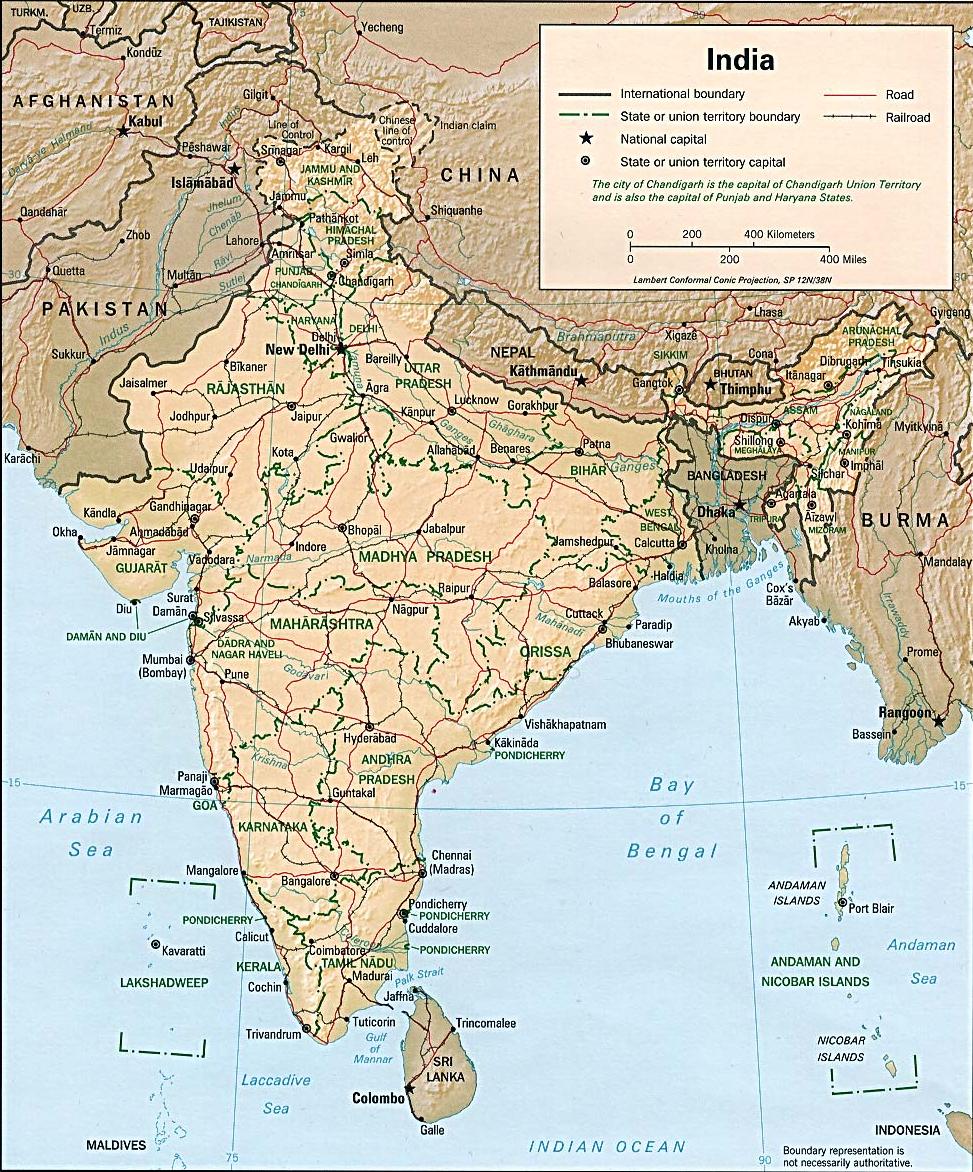
run, and to run efficiently. Therefore, eventually taking over India. The first dock in India was Surat which was the first trading post in 1608. They established their first factory (trading post) in Machilipatnam off the Bay of Bengal. King James I renewed Queen Elizabeth's charter in 1609 giving the company indefinite monopoly over India. The company, having European base in India and being fully established started to deal with political aspects of India. During the war of Plassey the company started to collect taxes. They gained even more power by defeating natives in local riots. They just kept gaining more power and in the mid 1800s the company controlled a portion of India, controlling military, economy, government, politics and religion. The Indian Rebellion in 1857 was when the British heard a rumor that gunpowder cartridges were being greased with fat from hogs and cows. When they made the natives bite into them they refused because hogs are considered unclean by the Muslims and the cows sacred to the Hindus. The natives lost and resulted in the company taking complete control over India. The Indian Rebellion really started to pick up in 1857. It lasted for 13 months. There were many wars, and when the Indians lost and the British retook territory, the rebels were severely punished. There were many soldiers from both Britain and Indian armies killed. The Indian Independence Movement happened when Gandhi arrived in India. He established protests, and encouraged a new non-violent way to go about defeating the British. Eventually after tons of Indian blood was spilled, India became free of British rule. On the 26th of January in 1950 India was finally pronounced the Republic of India. However, India wasn't the only country they had effect on. The British East India Trading Company gained control over all trade from China to India to the Caribbean and controlled all commerce to and from North America in 1760. The British East India Company was the cause of the 1773 Tea Act. The tea act was a tax law passed in London that resulted to the Boston Tea Party. There was an increase in taxes paid by American Colonists. They were furious The Indian Rebellion of 1857 and protested by destroying crates on ships in the Boston Harbor and dumping all tea into the Boston Harbor on December 16, 1773. This is an event that helped cause the American Revolution.

There were several East India Companies, but the one that made the most change in history was the British East India Trading company. It changed Indian history and brought them to Independence, and also changed American history, and helped cause the events that led to the American Revolution. If it wasn't for Queen Elizabeth I, the royal charter she signed, and the East Indiaman making it possible for the British East India Company to trade, these history changing events would never have happened. Times in 1874 reported "It accomplished a work such as in the whole history of the human race no other company ever attempted and as such is ever likely to attempt in the years to come."

Timeline

India

England